Renovation Cost to Value Australia
Key Takeaways
- Kitchen renovations typically cost $15,000 to $40,000 or more, depending on the layout, appliances, finishes and required trade work.
- Bathroom renovations often cost $15,000 to $35,000, with plumbing changes and waterproofing among the major cost drivers.
- Multi-room cosmetic renovations may cost $20,000 to $50,000, but spread improvements across a larger part of the property.
- A cosmetic refresh often offers the strongest cost-to-value potential because it creates an immediate whole-property transformation.
- A kitchen may deserve priority when it is dysfunctional, while a bathroom is usually most compelling when it is genuinely tired or damaged.
- Renovate for the suburb and target market, not your personal taste.
- These figures are indicative guidance from PropertyChat.ai, based on more than 20 years of property investing, mortgage and renovation experience. They are not current market data, financial advice or a substitute for local quotes.
Renovation cost to value Australia decisions become much easier when you stop asking, “Which room would I love to improve?” and start asking, “Which changes will matter most to this property’s target buyer or renter?” Kitchens and bathrooms attract attention, but they also consume budgets quickly. For many Australian investors, a multi-room cosmetic refresh can deliver a broader visual impact without the expense and complexity of moving plumbing, rewiring rooms or changing the structure. The smartest choice depends on what is dragging the property down, local expectations and how carefully the scope is controlled.
Which renovation generally offers the best cost-to-value ratio?
For many properties, a multi-room cosmetic refresh offers the strongest cost-to-value potential because it improves several highly visible areas without automatically introducing the expense of structural work, waterproofing or relocated services.
However, there is no single renovation that will deliver the best result for every property. A kitchen may provide greater value when poor storage, damaged cabinetry or an impractical layout is the home’s main weakness. A bathroom may deserve priority when moisture damage, failed waterproofing or deteriorating fixtures create concern.
The best renovation for property value is usually the smallest sensible project that addresses the strongest buyer or renter objection.
How do kitchen, bathroom and multi-room renovation costs compare?
The short answer is that kitchens and bathrooms concentrate substantial spending into one area, while cosmetic renovations distribute the budget across the property.
The ranges below come from guidance supplied by PropertyChat.ai. Actual costs can vary significantly according to location, property condition, site access, labour, materials, approvals and the final scope.
| Renovation type | Indicative cost | Main cost drivers | Key risks | When it may offer strong value |
| Kitchen | $15,000 to $40,000+ | Cabinetry, appliances, benchtops, plumbing and electrical work | Layout changes, premium appliances and custom cabinetry | The kitchen is dated, impractical or visibly reducing buyer appeal |
| Bathroom | $15,000 to $35,000 | Waterproofing, tiling, plumbing, fixtures and layout changes | Moisture damage, waterproofing failures and relocated plumbing | The bathroom is worn, damaged or clearly below local expectations |
| Multi-room cosmetic refresh | $20,000 to $50,000 | Painting, flooring, lighting, handles and minor repairs | Scope creep, inconsistent finishes and overlooked maintenance | Several rooms look tired, but the property remains structurally functional |
These numbers reveal a common renovation trap. A $30,000 kitchen sounds more focused than a $40,000 cosmetic renovation, but the kitchen changes one room. The cosmetic budget might improve the entry, living area, bedrooms and hallways at once.
When buyers walk through a property, they experience the whole home. Fresh paint, consistent flooring, modern lighting and repaired details can make listing photographs and inspections more appealing.
Why can a cosmetic renovation offer better value?
A multi-room refresh can provide better bang for your buck because it targets highly visible problems without automatically introducing expensive structural work.
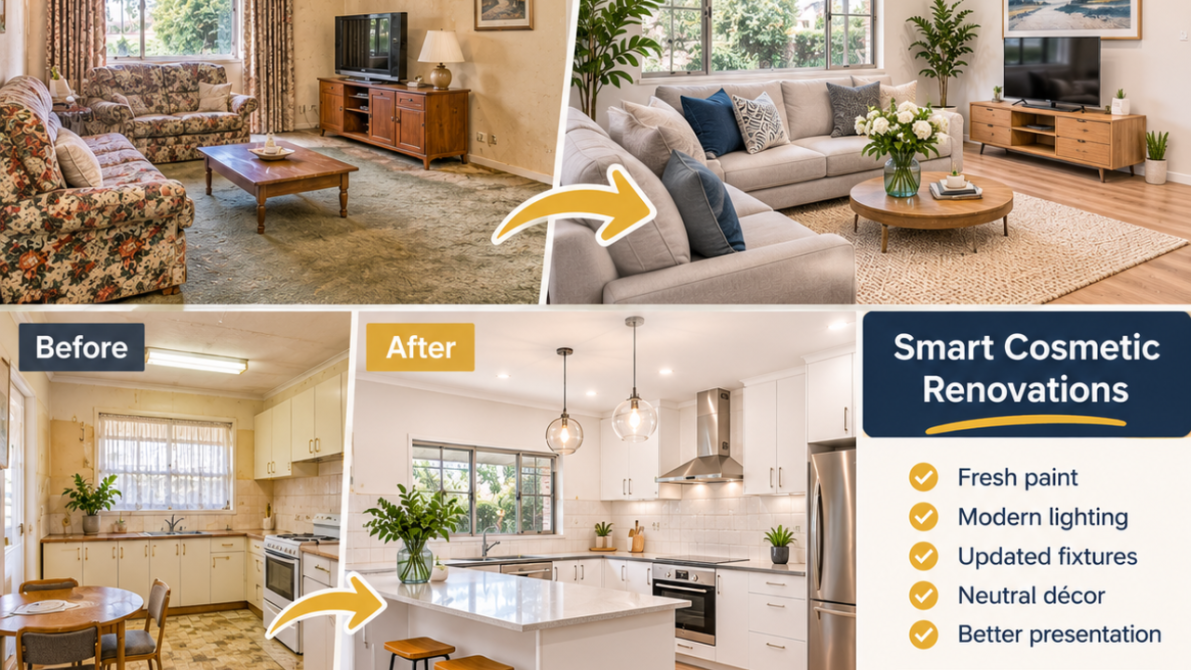
PropertyChat.ai’s guidance highlights four changes that can transform a tired property:
- Fresh interior paint
- New carpet or floorboards
- Updated light fittings
- Modern handles and fixtures
None of these changes sounds dramatic by itself. Together, they can remove the visual clues that make a property feel neglected.
Buyers and renters do not assess each improvement in isolation. Peeling paint, mismatched floors, yellowed switches and dated lights combine to create one clear impression: more work and expense after moving in.
Correcting these problems across several rooms can make the property feel clean, consistent and move-in ready. A cosmetic renovation may also reduce the risks and hidden costs associated with relocating plumbing, altering electrical layouts or seeking approvals.
That does not guarantee a particular sale price, valuation increase, cosmetic renovation ROI or rental result. It does mean that more of the renovation budget can be directed towards improvements that prospective buyers and renters will immediately notice.
For a more detailed comparison, read Cosmetic Renovation vs Structural Renovation.
When is a kitchen renovation worth the cost?
A kitchen renovation is most defensible when the existing space is dysfunctional, badly worn or significantly below the standard expected in the area.
Kitchens are emotional rooms. Buyers imagine preparing meals, entertaining friends and managing family life in them. Renters also notice storage, usable bench space, ventilation and appliance condition.
A full kitchen replacement may be appropriate when:
- The layout makes cooking, cleaning or storage difficult
- Cabinet doors, drawers or benchtops are damaged
- Appliances are unreliable or near the end of their usable life
- The finishes make the entire property feel dated
- Comparable local properties offer substantially better kitchens
- Targeted cosmetic work will not correct the room’s main problems
However, not every dated kitchen needs to be gutted. If the cabinetry and layout remain functional, targeted work may be enough. Painting doors, replacing handles, updating the splashback or installing a new benchtop can improve presentation without paying for an entirely new room.
When assessing kitchen renovation cost Australia figures, compare like-for-like scopes. A basic cosmetic update and a full replacement with custom cabinetry, new appliances and relocated services are very different projects.
The best renovation for property value is not necessarily the biggest project. It is the smallest sensible project that solves the property’s real problem.
When should a bathroom renovation take priority?
A bathroom should usually take priority when it feels unhygienic, damaged or likely to worry a buyer about future repairs.
An old-fashioned bathroom can still be functional. A bathroom with cracked tiles, failed grout, poor ventilation, visible moisture damage or deteriorating fixtures creates a different reaction. It suggests risk.
Bathroom renovation cost Australia estimates can rise quickly because several specialised trades may be involved. Waterproofing, tiling and plumbing must also be completed properly. Moving a shower, bath, toilet or vanity can add expense without necessarily adding equivalent buyer or renter appeal.
Before committing to a complete renovation, separate cosmetic age from genuine failure. A sound bathroom might benefit from:
- New tapware or a shower screen
- Improved lighting and ventilation
- Fresh grout and silicone
- A modern vanity or mirror
- Updated paint outside tiled areas
Spend heavily when the room truly needs it, not merely because its colour scheme is no longer fashionable. If moisture, waterproofing or structural problems are suspected, obtain appropriate professional advice before finalising the scope.
Kitchen vs bathroom renovation ROI: which should come first?
When comparing kitchen vs bathroom renovation ROI, the room creating the greatest buyer or renter objection should usually come first.
If the kitchen has broken cabinetry and almost no usable bench space, updating a serviceable bathroom first is unlikely to solve the property’s main weakness. If the bathroom has water damage while the kitchen is clean and practical, the bathroom becomes the priority.
Use this decision order:
- Address safety and defects. Repair moisture, electrical, structural or plumbing problems before making cosmetic changes.
- Identify the strongest objection. Determine which room makes the property hardest to sell, lease or refinance.
- Compare local expectations. Review comparable properties at the sale price or rent level you are targeting.
- Choose the minimum effective scope. Do not replace what can be repaired or refreshed effectively.
- Price the complete project. Include trades, materials, approvals, waste removal, holding costs, possible delays and a contingency.
- Consider the whole property. Make sure one renovated room will not highlight how tired the remaining rooms appear.
This process prevents the renovation from becoming a personal design project disconnected from its investment purpose.
You can also explore Which Rooms to Renovate Before Selling or Refinancing? for a more detailed room-by-room assessment.
How do you avoid overcapitalising on renovation in Australia?
Overcapitalising occurs when you spend more on improvements than the property or target market can reasonably support.
PropertyChat.ai provides a clear example. Putting a $60,000 kitchen into a property in an area where the typical property value is around $450,000 may make recovering that cost difficult. The same kitchen could be more appropriate in a $900,000 area where buyers expect higher-quality finishes.
The principle is simple:
Renovate for the area, not for yourself.
That means resisting premium appliances, highly personalised finishes or structural changes unless the target market values them enough to justify the extra spending.
Before approving a scope, ask:
- What features do comparable renovated properties offer?
- Will buyers or renters notice this upgrade?
- Is this change solving a genuine problem or expressing my taste?
- Could a lower-cost alternative create a similar result?
- What happens if labour or material costs exceed the quote?
- Does the project still make sense when a contingency is included?
- Would the property become over-improved compared with nearby homes?
- Is there evidence that the target market will pay more for the proposed work?
The goal is not to create the most impressive home in the suburb. It is to make the property competitive, functional and appealing without spending beyond what the market is likely to recognise.
For a broader investment framework, explore the PropertyChat.ai property investing resources and its dedicated renovation information.
What renovation process keeps spending under control?
A disciplined renovation budget for property investment begins with evidence and scope, not shopping.
1. Define the target person
Decide whether the finished property needs to appeal to families, professionals, downsizers, students or another clearly defined market. Their priorities should guide the work.
For example, a family may value durable flooring, storage and a practical kitchen. A professional renter may prioritise low-maintenance finishes, good lighting and a clean, modern presentation.
2. Inspect the whole property
List defects, maintenance issues and presentation problems room by room. Separate necessary work from optional improvements.
This step helps you avoid spending heavily on finishes while overlooking repairs that could create bigger problems later.
3. Rank improvements by impact
Give priority to safety, function and obvious visual problems. A simple scoring system based on cost, visibility and urgency can prevent emotional decisions.
One approach is to rate each proposed improvement from one to five for:
- Urgency
- Buyer or renter visibility
- Functional impact
- Estimated cost
- Risk of unexpected work
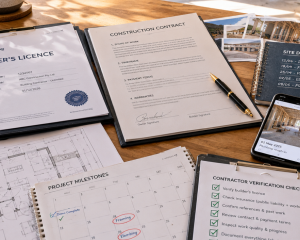
4. Obtain itemised quotes
A single total makes comparison difficult. Ask contractors to separate demolition, labour, fixtures, materials, disposal and optional work.
Itemised quotes make it easier to compare providers, identify exclusions and reduce the risk of a renovation budget blowout.
5. Hold a contingency
Renovations uncover surprises. An older wall may hide damaged plumbing, a floor may require levelling or a planned product may become unavailable.
The appropriate contingency will depend on the property’s age, condition and project complexity. Keep part of the budget uncommitted rather than assuming every dollar can be spent on the initial scope.
6. Reassess before changing the scope
Small upgrades accumulate quickly. Every variation should answer one question: does this help achieve the original investment objective?
If it does not improve safety, function, presentation or market appeal, reconsider whether it belongs in the project.
You can also explore Your Property Success education for structured property and renovation learning.
Can renovating improve rental yield?
Investors who want to renovate for rental yield in Australia should focus on improvements that support tenant demand, functionality and durability.
Potentially useful improvements may include:
- Durable and easy-to-clean flooring
- Fresh, neutral paint
- Reliable heating and cooling
- Practical storage
- Safe, functional kitchens and bathrooms
- Improved lighting
- Low-maintenance outdoor areas
The aim is not simply to make the property look expensive. It is to create a home that suits the local rental market and reduces obvious objections.
Before relying on an expected rent increase, compare similar renovated and unrenovated rental properties in the area. Consider vacancy, holding costs and the time required to complete the work.
For further guidance, read What ROI Can You Expect from Renovating a Rental Property?.
Put more of your budget into the property
Before purchasing paint, flooring, tiles or fittings, ask PropertyChat.ai about the complimentary Trade Discount card described in its renovation guidance. The card may provide savings across renovation purchases and everyday spending, with the first year’s $250 annual fee covered as a gift under the stated offer.
A discount should support a sound renovation plan, not justify additional spending. Set the scope first, compare prices and only purchase products that serve the property’s target market and investment objective.
The strongest renovation cost-to-value decision usually comes from solving the property’s biggest problem with the least unnecessary complexity.
A cosmetic multi-room refresh can be the standout choice when the entire property feels tired. A kitchen becomes the priority when poor function or presentation is holding the home back. A bathroom deserves investment when its condition creates concern rather than simply looking unfashionable.
PropertyChat.ai’s guidance is drawn from Jane Slack-Smith’s more than 20 years of property investing, mortgage and renovation experience. It offers practical education, not live market analysis, individual financial advice or guaranteed outcomes. Confirm your budget with local trades and assess comparable properties before committing.
Ready to assess your renovation options? Visit PropertyChat.ai to ask questions about your kitchen, bathroom or multi-room renovation and learn how to focus your budget on the changes that may matter most to your target market. You can also ask about the current Trade Discount card offer before purchasing materials or fittings.
Suggested PropertyChat.ai articles
- Cosmetic vs Structural Renovations: Which Adds More Value for Your Budget?
- Which Rooms to Renovate Before Selling or Refinancing?
- Renovation Budget Blowout: How to Stop Costs Spiralling
- The Best Renovations That Instantly Boost Property Value in Australia
- What ROI Can You Expect from Renovating a Rental Property?
- How to Choose the Right Renovation With Limited Equity
This article is provided in line with the Brand Voice of PropertyChat and Your Property Success, emphasising trust, actionable advice, and long-term partnership in property finance.
Transcript
Kitchen vs Bathroom Reno: Which Wins on Value?
0:00
Welcome to this explainer. Look, if you’ve ever stared at a tired, outdated property and thought, “Man, where do I even put my hard-earned money to
0:08
actually get a return without completely overspending?” Well, you are in the exact right place. Today, we’re cutting right through the trendy design shows
0:15
and looking purely at the cold, hard data behind property renovations. So, let’s just dive right in with the ultimate renovation question, the one
0:23
that trips up so many investors and homeowners. Which room should you improve first? It sounds like a simple question, right? But the wrong answer
0:31
can literally cost you tens of thousands of dollars. People usually start by asking what they would personally love to improve rather than what the target
0:39
buyer or renter actually needs. We are absolutely going to change that mindset today. Here’s our road map for today.
0:46
We’ll hit the renovation dilemma, break down kitchen and bathroom costs, explore the multiroom refresh, figure out the
0:53
best cost of value ratio, talk about controlling your budget, and finally look at your next steps at property chat.ai. All right, section one, the
1:02
renovation dilemma. Let’s figure out where your money really goes. Okay, let’s unpack a trap I see people fall into all the time. Imagine dropping 60
1:11
grand. Yeah, $60,000 to put a premium custom kitchen into a property. Sounds pretty amazing, right? But what if that
1:18
property is sitting in a modest market where the typical home value is around $450,000?
1:24
You’ve just poured a massive chunk of the property’s total value into one single room. Understanding where your money actually goes is the absolute
1:32
foundation of smart investing. It is so easy to get caught up in shiny new appliances and luxury tiles, but we really need to step back and look at the
1:41
broader financial picture of the neighborhood. This perfectly illustrates the absolute danger of over capitalizing. What does that mean?
1:49
Basically, it’s spending way more on improvements than the property or your target market can reasonably support.
1:55
When you do this, getting your money back becomes incredibly difficult. Why?
1:59
Because you built for yourself. you built for your own personal taste rather than for the local target market who simply won’t pay a premium for those
2:06
luxury finishes. Kitchen and bathroom costs. These are the heavyweight single room expenditures. These are the
2:14
heavyweights of the renovation world for sure. You have to understand their cost drivers if you want to protect your bottom line. Kitchens and bathrooms
2:21
concentrate substantial high-risisk spending into just one small area of the house. An indicative kitchen renovation can easily run you anywhere from $15,000
2:30
to $40,000 or even more. That budget gets swallowed up super quickly by custom cabinetry, benchtops, and messing
2:37
with layout changes. On the flip side, a bathroom runs between 15,000 and 35,000.
2:43
Here, your hidden enemies are waterproofing, tiling, and relocating the plumbing. You are essentially paying top dollar for highly specialized trades
2:51
in a really tight space. Because these costs are so staggering, you shouldn’t just gut a room just because it looks, you know, a little out of fashion. You
2:59
should really only prioritize these expensive single room projects when they are genuinely dysfunctional, unhygienic, or severely damaged. Like, if a kitchen
3:08
layout makes cooking literally impossible, or the cabinetry is falling apart, yeah, you have to fix it. For bathrooms, it’s all about risk. Failed
3:16
waterproofing and visible moisture damage, those are massive red flags for buyers and absolutely must be addressed first.
3:23
Okay, section three, the multi-room refresh. This is the Challenger that can transform the whole property. Now, let’s look at a totally different pathway.
3:32
Think about a budget of 20 to $50,000 for a multi-room cosmetic refresh. Now, that might sound remarkably similar to the cost of that brand new kitchen we
3:41
just talked about. However, it fundamentally changes how buyers and renters experience the property. Instead of sinking 30 grand into one room and
3:49
leaving the rest of the house looking tired and dated, this budget is spread out to lift the entire home. We’re talking about combining simple, high
3:57
impact changes that honestly work like magic. Fresh interior paint throughout, consistent new carpet or floorboards, modern light fittings, and updated
4:05
handles. None of these are structurally complex, but together they completely remove the visual clues that make a property feel neglected. Peeling paint
4:14
and yellowed light switches scream expensive work needed to a buyer. Fix those simple things and the home instantly feels movein ready. Let’s hit section four, the best costtoval ratio.
4:26
This is our head-to-head data comparison. It is time for the definitive comparison to see how these renovation costs really compare and more
4:33
importantly which one actually offers the best costtoval ratio. Looking at this data side by side reveals a pretty
4:40
stark contrast. A kitchen or bathroom forces you to deal with plumbing, waterproofing, and structural risks, all concentrated in one expensive spot. But
4:49
the multi-room cosmetic refresh, it utilizes safe, highly visible upgrades like paint and flooring because it upgrades the whole property without
4:58
introducing expensive hidden structural risks. The multiroom refresh generally offers the absolute strongest cost value potential for most tired properties. You
5:06
just get so much more visual impact for your dollar. There’s a saying I absolutely love here and it perfectly summarizes the core philosophy you need
5:14
to adopt. Let me read this twice. The best renovation for property value is usually the smallest sensible project
5:21
that addresses the strongest buyer or renter objection. You don’t need to build a magazine cover home. You just need to identify the property’s biggest
5:29
weakness. That one thing that makes someone want to walk away and fix it with the least amount of unnecessary complexity. This matters so much because
5:38
buyers and renters don’t look at rooms in a vacuum. When they walk through a property, they experience the entire home all at once. A consistent, clean,
5:46
fresh impression as they walk from the entryway, through the living room, and down the hallway will almost always beat the property that has one stunning
5:54
luxury kitchen, but stained carpets and peeling paint everywhere else. All right, section five, controlling your budget. Here’s your tactical playbook
6:02
for managing the project. Knowing what to do is one thing, but knowing how to keep your spending from spiraling, that’s where you actually make your
6:10
money. Let’s quickly walk through this awesome six-step framework that ensures every dollar you spend is based on evidence rather than emotional shopping.
6:18
First up, define who is going to live there. A family needs durable floors, while a young professional might want modern finishes. Second, inspect the
6:26
whole property to catch any hidden defects. Third, rank your improvements.
6:31
Fourth, demand itemized quotes so contractors can’t hide bloated costs from you. Fifth, always, always hold a
6:38
contingency fund for surprises hidden behind the walls. And sixth, reassess everything before you change your scope.
6:44
When you get to step three of that framework, ranking those improvements is absolutely crucial. You have to score every proposed change against these five
6:52
criteria. Is it urgent for safety? Will a buyer actually notice it? Does it improve how the home functions? What’s
6:59
the cost? And crucially, what’s the risk of unexpected work? If replacing a perfectly fine vanity risks damaging the
7:06
plumbing and the floor tiles, well, the risk outweighs the functional impact.
7:10
This kind of strict scoring is what prevents dangerous scope creep. Renovate for the area, not for yourself.
7:17
Seriously, resist the urge to buy those premium appliances and highly personalized trendy finishes. Unless, of course, the local target market
7:25
specifically values them enough to pay a higher price or higher rent for them. If the neighboring homes don’t have imported marble countertops, you
7:32
definitely shouldn’t either. Finally, section six, next steps at property chat.ai. Let’s put this strategy into
7:40
action. Now that you have the framework and really understand the data behind costtoval ratios, let’s talk immediate next steps. Part of keeping that budget
7:49
tight is paying the right price for materials, right? Well, before you buy a single tin of paint, new flooring, or lighting fixtures, you can actually
7:56
leverage a complimentary trade discount card. This is a gamecher that helps support a sound pre-planned renovation budget by giving you access to proper
8:05
trade savings. But remember, a discount is there to bring your planned costs down, not to justify splurging on a more expensive item. To grab that COD and to
8:14
really dial in your strategy, you absolutely need to visit https/www.propy property chat.ai. It’s an incredible
8:23
resource drawn from over 20 years of property investing and renovation experience. You can jump on there for deeper analysis and specifically to ask questions about whether a kitchen,
8:31
bathroom, or a multiroom refresh is exactly right for your specific property. So, make sure you check out https/www.propy
8:41
chat.ai before you finalize any of your scope. I’m going to leave you with this final provocative thought to chew on before you swing a single hammer on your
8:50
property. Is your planned renovation actually solving a genuine problem for your future buyer? Or are you just using your investment budget to express your
8:58
own personal taste? Keep it simple, keep it targeted, and focus on the whole property experience. Thank you so much for joining me on this explainer, and hey, happy renovating.
Frequently Asked Questions
How much does a kitchen renovation cost in Australia?
The PropertyChat.ai guidance provides an indicative range of $15,000 to $40,000 or more. Size, cabinetry, appliances, finishes and changes to plumbing or electrical services can materially affect the final kitchen renovation cost. Obtain current, itemised quotes for your property and check what each quote includes.
How much does a bathroom renovation cost in Australia?
An indicative bathroom budget is $15,000 to $35,000. Costs may increase when plumbing is relocated or extensive waterproofing, repair and tiling work is required. A cosmetic update may cost less if the underlying bathroom remains structurally sound and free from moisture problems.
Is a cosmetic renovation better than replacing the kitchen?
It can be when several rooms look tired and the kitchen remains functional. Paint, flooring, lighting and minor fixture updates can spread the visual impact across the whole property. A replacement kitchen may offer greater value when the existing layout, storage or condition creates a major buyer or renter objection.
How do I know if I am overcapitalising?
Compare the proposed scope with local property values, rents and the standard of competing homes. If your finish level greatly exceeds what the target market expects, reconsider the project. Include a contingency, obtain current quotes and seek appropriate professional advice before relying on an expected increase in rent or property value.