The Best Renovations That Instantly Boost Property Value in Australia
Key Takeaways
- Kitchen and bathroom renovations consistently deliver the highest ROI, with kitchen upgrades providing 60-80% returns
- Focus on filling the pricing gap between unrenovated and renovated properties in your local market
- Strategic renovations like flooring, fresh paint, and curb appeal improvements offer exceptional value for money
- Avoid overcapitalising by limiting spending to 5% of your home’s value for optimal returns
- The “two-property, one-renovation approach” builds long-term wealth without constant renovation stress
You’ve probably stood in your tired kitchen on a Sunday morning, scrolling through renovation inspiration on your phone, wondering if that $40,000 kitchen makeover will actually put money back in your pocket when you sell. Maybe you’ve watched another episode of The Block, calculating whether those glossy transformations translate to real-world returns. The truth is, most Australians approach renovations backwards, chasing the shiny upgrades instead of understanding what actually moves the needle on property value.
Here’s what keeps property owners awake at night: spending tens of thousands on renovations that don’t deliver. The fear of overcapitalising on renovations haunts every renovation decision, especially when tradies disappear, budgets blow out, and that “simple” bathroom upgrade suddenly needs council approval. You’ve seen the horror stories, neighbours who spent $100,000 renovating only to discover their efforts added just $50,000 to the sale price.
The renovation shows make it look effortless. In reality, choosing the wrong upgrades can leave you financially worse off, regardless of how beautiful your home looks. This isn’t about creating your dream space, it’s about making strategic decisions that protect and grow your wealth. According to industry experts at PropertyChat.ai, based on 20 years of solid investing experience, “you’re not looking for the renovation that instantly boosts value. You’re looking for the renovation that fills the pricing gap between an unrenovated property and a renovated one in your market.”
Understanding the Australian Renovation Landscape
The renovation market has been particularly strong recently, with the value of alterations and additions hitting a four-year high. However, construction costs remain elevated, making strategic decision-making more crucial than ever. Kitchen renovations consistently rank as the top value-add when it comes to the best renovations that add value to a house in Australia, delivering an estimated 60-80% return on cost in most metro markets.
Industry data reveals that kitchen renovations typically recoup between 60% and 80% of their cost at resale, with the sweet spot for costs sitting between $15,000 and $40,000 depending on project scale. For perspective, a mid-range kitchen renovation costing $35,000 in Sydney typically increases property value by around $50,000, delivering a solid 43% ROI.
The key insight from renovation specialists is that you don’t need luxury finishes to achieve strong returns. What matters most is creating clean, functional spaces that feel contemporary and move-in ready for your target buyer demographic.
The Kitchen: Your Home’s Financial Engine and Top ROI Renovation
Kitchens deserve their reputation as the heart of the home, and there’s solid financial reasoning behind this. When it comes to kitchen renovation ROI in Australia, a strategic upgrade can transform buyer perception instantly, shifting your property from “needs work” to “move-in ready” in the minds of potential purchasers.
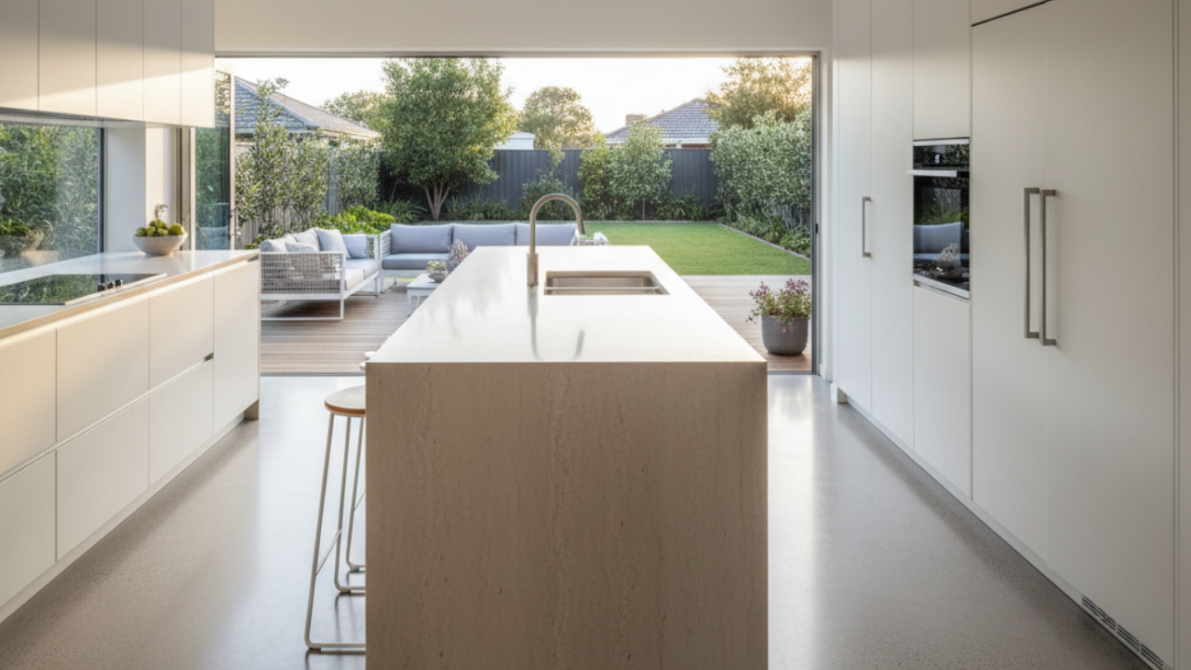
The most effective kitchen renovations focus on functionality over luxury. Opening up closed-off kitchens to create open-plan layouts connecting to dining and living spaces modernises the entire home’s feel. Adding a kitchen island provides extra workspace and storage whilst creating that natural gathering point families crave.
Smart kitchen investments include replacing cabinet fronts and hardware rather than full cabinetry replacement, installing stone or engineered benchtops, and updating to energy-efficient appliances. These changes deliver visual impact without the massive expense of structural alterations.
Remember, you’re not creating a showroom, you’re solving problems for future owners. Focus on clean lines, contemporary colours, and timeless materials that appeal to the broadest possible audience. That hand-painted Italian tile might look stunning to you, but neutral finishes sell homes.
Bathrooms: Small Spaces, Big Returns – Understanding Bathroom Renovation Cost vs Value
Bathroom renovations punch above their weight when it comes to adding value. A new bathroom can increase property value by $40,000-$60,000, whilst renovating an existing bathroom typically adds about 3% to your home’s overall value. Understanding bathroom renovation cost vs value is essential before you commit to a project.
The secret to successful bathroom renovations lies in maximising space and modernising fixtures. Frameless glass showers, large-format tiles, and wall-hung vanities create that floating, spacious feel buyers associate with quality and contemporary design. Water-saving features like dual-flush toilets and efficient tapware aren’t just environmentally responsible, they’re attractive to cost-conscious buyers worried about utility bills.
PropertyChat.ai emphasises that bathrooms should be “clean, contemporary, functional” rather than spa-like retreats. You’re solving practical problems, not indulging personal taste. Stick with neutral, timeless finishes that won’t date quickly or alienate potential buyers.
Cheap Renovations That Add Value: The Power of Paint and Flooring
Sometimes the best renovations for resale value in Australia are also the most affordable. Paint delivers the highest ROI of any renovation project, you can transform an entire apartment for $6,000-$8,000 or a house for $9,000-$14,000, with immediate visual impact. These are the kinds of cheap renovations that add value without blowing your budget.
Fresh, neutral paint throughout creates a blank canvas allowing potential buyers to imagine their belongings in the space. If you’ve got bold feature walls, painting them white or neutral colours broadens your home’s appeal dramatically.
Flooring matters more than most property owners realise. Removing dated carpet and installing polished concrete or timber-look tiles makes spaces feel bigger and newer. According to renovation experts, “It’s psychological, but it works.” The perception of cleanliness and modernity that comes with contemporary flooring can influence buying decisions significantly.
Strategic Outdoor Improvements to Increase Home Value
Australians love outdoor living, making decks, patios, and landscaping some of the most valuable exterior improvements to increase home value. Adding a wooden deck provides approximately 66% ROI, whilst patios deliver around 55% returns. These aren’t just aesthetic improvements, they’re functional extensions of living space that align with our outdoor lifestyle.
Curb appeal deserves special attention because potential buyers form impressions within the first 30 seconds of seeing your property. A new front door, tidy landscaping, and a clean driveway can influence buyer interest before they even step inside.
Simple improvements like lawn revival, basic landscaping, and exterior painting often deliver disproportionate returns because they signal that the property has been well-maintained throughout.
What to Avoid: The Overcapitalisation Trap in Australian Renovations
Understanding what not to do is equally important. Overcapitalising on renovations in Australia remains one of the most common and costly mistakes property owners make. Major internal renovations involving moving walls, restructuring layouts, and relocating plumbing typically deliver poor returns unless you have substantial budgets and deep market knowledge.
Swimming pools, whilst appealing to some buyers, often don’t deliver strong returns and can actually deter buyers who see them as maintenance headaches. The same applies to overly personalised renovations, that custom wine cellar might be your dream, but it could be the next owner’s nightmare.
PropertyChat.ai warns against “chasing the glossy upgrade” and emphasises that “your target buyer, the owner-occupier who’s going to pay you the most, doesn’t want to subsidise your taste. They want clean, functional, and move-in ready.”
I’ve seen this play out in my own family. When my sister settled on a property in Brisbane, she flew up from Sydney with our mum, who happens to be an interior decorator, and within days, the renovation excitement had completely taken hold. She was already chasing quotes for a deck. Perfectly understandable. It would look beautiful, it would be functional, and our mum had a clear vision for it. The quotes came back ranging from $25,000 to $38,000. That’s when I had to step in and be the voice of reason rather than the enthusiastic renovation cheerleader she was hoping for. When we ran the numbers, it became clear she’d only add around $25,000 in value from a $38,000 spend. The deck would have cost her money, not made her money. What made it even more striking was that the property had already risen $30,000 in value within just three months of purchase, simply from buying well. I reminded her of the rule I always come back to: start with the end value and work backwards. We ended up paying $200 for a professional valuer to assess several different renovation options, one of the best $200 she ever spent. It gave her a clear, unemotional framework for every decision that followed. Renovation enthusiasm is powerful. But without a financial anchor, it will cost you.
The Two-Property, One-Renovation Strategy
For property investors looking at renovations strategically, there’s a smarter approach than constantly renovating. The “two-property, one-renovation approach” involves buying property one and holding it, then buying property two and renovating strategically to fill the gap between unrenovated and renovated in your market, then holding both.
This strategy avoids the trap of constantly being in renovation mode, bleeding time and money. You’re being surgical about renovations rather than emotional, focusing on properties where strategic improvements will deliver the clearest returns. It’s one of the most reliable ways to increase property value in Australia without constantly disrupting your lifestyle or your finances.
Budget and Market Considerations: How to Increase Property Value Without Overcapitalising
Every neighbourhood has a ceiling on what buyers will pay, regardless of renovation quality. If homes in your area typically sell for $800,000, spending $400,000 on renovations won’t push your property to $1.2 million unless the broader market supports those values.
The fundamental formula remains simple: your home’s new value should equal current value plus renovation costs. As a rule of thumb, avoid spending more than 5% of your home’s value on any single renovation to ensure positive ROI.
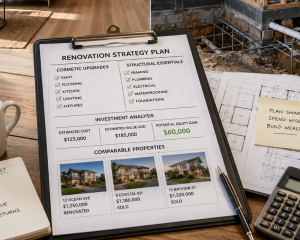
For major projects, research comparable sales in your area carefully. Look at both unrenovated and renovated properties of similar size and type. If unrenovated homes sell for $1 million and renovated equivalents fetch $1.5 million, aim to spend no more than 80% of that $500,000 difference, around $400,000 maximum, to maintain a safety buffer.
Making Smart Renovation Decisions for Long-Term Resale Value
The most successful renovations solve practical problems for future owners rather than indulging personal preferences. Focus on improvements that make properties feel clean, contemporary, and functional rather than luxury showcases. These are the decisions that translate directly into the best renovations for resale value in Australia.
Smart storage solutions often get overlooked but provide ongoing value that buyers appreciate. Installing custom built-in shelving, wardrobe organisers, and utilising under-stairs areas creates practical benefits that busy families want.
Energy-efficient renovations are becoming increasingly attractive to Australian buyers. Solar systems, double-glazed windows, and efficient heating and cooling systems reduce operating costs whilst signalling environmental responsibility to buyers.
If you’re unsure whether a planned renovation will deliver a positive return in your specific market, the safest approach is always to research comparable sales first, understand your price ceiling, and focus on cosmetic renovations before committing to anything structural.
Renovations that add value to a house in Australia aren’t about the most glamorous upgrades, they’re about the most strategic ones. Kitchens, bathrooms, paint, flooring, and outdoor improvements consistently deliver results because they solve real problems for real buyers. The key is always to research your local market, understand the pricing gap between unrenovated and renovated properties, and spend wisely within that gap.
If you’re ready to make renovation decisions that protect and grow your wealth, PropertyChat.ai can guide you through the process with confidence. Based on 20 years of property investment and renovation experience, Jane Slack-Smith and the team at PropertyChat.ai provide proven frameworks and strategies that take the guesswork out of renovation decisions. Visit www.propertychat.ai to get started today, and stop leaving money on the table.
Related Articles You Might Find Helpful
- How to Finance a Renovation: Your Complete Guide to Redraw, Construction Loans, Personal Funds and Refinancing
- Renovate vs Extend: Should I Renovate or Extend My Current Property for the Best Returns?
- The Strategic Renovator’s Guide: Maximising Property Value and Avoiding Overcapitalisation in the Australian Market
- Common Renovation Mistakes: Avoid Pitfalls as a First-Time Renovator
This article is provided in line with the Brand Voice of PropertyChat and Your Property Success, emphasising trust, actionable advice, and long-term partnership in property finance.
Transcript
Stop Overcapitalising: The Truth About What Maximises Property Value.
0:00
All right, let’s get right into it. We all have that dream, don’t we? Picturing that perfect renovation, the brand new kitchen, that amazing bathroom. But you
0:08
know, right behind that dream, there’s always that nagging question. Is this actually going to make me money, or am I just lighting cash on fire? Well, today
0:16
16 secondswe are going to get you the answer to that. I mean, you’ve been there, right?
0:19
You’re sitting on the couch watching a show like The Block. You see these incredible high-end transformations, and you just have to wonder, does that
0:26
really work in the real world? Does that super expensive fancy feature wall actually add 10 grand to the final
0:33
price? Come on, let’s be real. A little bit of skepticism is healthy. And you know what? That skepticism is totally
0:41
justified because the number one fear for any homeowner is over capitalizing. It is the absolute nightmare scenario.
0:48
Pouring all of your hard-earned savings into a renovation you love only to find out when you go to sell that you’ve actually lost money. And that’s what
0:55
this really is. It’s the renovation gamble and it’s a really high stakes game, especially right now in the Australian market with building costs
1:03
just going through the roof. Making the wrong move here can be a seriously expensive mistake. And we’ve all heard
1:10
the horror stories, haven’t we? budgets that just explode overnight, tradies that just disappear, that simple little
1:18
job that all of a sudden needs a mountain of paperwork from the council,
1:21
and of course, the most painful one of all, spending $100,000 just to see your property’s value nudge up by maybe 50,000. It happens way more than you’d think. So, how do you avoid all this?
1:33
How do you stop gambling and start making smart investments? Well, it all begins with this really crucial shift in your mindset. This is the moment we stop
1:41
thinking like we’re on a home decorating show and start thinking like a savvy investor. And the secret, it’s all about understanding something called the
1:49
pricing gap. Okay, so what on earth is the pricing gap? It’s actually really simple. It’s just the difference in the
1:56
sale price between a tired, unrenovated house and a nicely updated one in the exact same suburb. See, your goal isn’t
2:04
to build the fanciest house on the block. Your goal is to spend just enough money to bridge that gap and then you get to pocket the difference. The
2:12
experts over at property chat.ai just nailed it with this quote. It really captures this whole new way of looking at things. It’s not about adding flashy
2:21
features. It’s about closing that value gap that already exists in your local market. That right there is the key to unlocking profit. So, now that we have
2:30
that framework, where do you actually put your money first for the biggest bang for your buck? Where do you start if you want to strategically close that
2:37
pricing gap? Let’s take a look at the data. Okay, the undisputed champion, the absolute financial engine room of your
2:45
home is the kitchen. A smart, strategic kitchen rena consistently delivers a return on investment somewhere between 60 and 80%. This is where buyers make
2:54
those big emotional and financial decisions. And when you look at the numbers like this, you can see a really clear pecking order. Kitchens are right
3:02
up there, leading the pack at an average of 70% return. And you know, in Australia, outdoor living spaces like decks and patios also do incredibly
3:09
well. Why? Because they literally extend the usable, functional living area of a home. But here’s the crucial part. You
3:16
don’t need some high-end top-of-the-line European kitchen to get these returns.
3:20
Not at all. The smart money goes into things like creating an open plan feel.
3:25
Maybe just replacing dated cabinet doors and handles, putting in a durable stone or engineered benchtop, and adding some modern energyefficient appliances. These
3:34
are the things that just scream, “I’m ready to move in to a potential buyer.”
3:37
And that exact same philosophy applies to bathrooms. You have to forget about creating a luxury day spa. Buyers really don’t want to pay extra for your
3:45
specific personal taste. They just want a space that feels clean, looks contemporary, and is super functional.
3:51
Think frameless glass showers, wallhung vanities, things that create a sense of space and light. All right, so beyond the big ticket items like kitchens and
3:59
bathrooms, there’s some incredibly effective upgrades that deliver a massive impact for a surprisingly minimal spend. We call these the smart
4:07
easy wins. These three things, they probably have the highest return on investment of almost any project you can do. Number one, paint. Seriously, a
4:16
fresh coat of a good neutral paint is like a facelift for your entire home.
4:20
Two, flooring. Tearing out that old dated carpet and putting in something like Timberlook tiles makes the space feel so much bigger and cleaner. And
4:29
three, curb appeal. You never get a second chance to make a first impression and it starts at the front door. So, we know what to do. But just as important,
4:38
maybe even more important is what not to do. So, let’s go over a few rules that will protect your investment and make sure you don’t fall into that over
4:45
capitalization trap. Now, this comes from a real life story. An owner in Brisbane was all set to spend up to $38,000 on a brand new deck. And on the surface, it seemed like a great idea.
4:57
But after they actually ran the numbers,
4:59
it turned out it would only add about $25,000 in value. That’s a net loss. So instead, they paid a professional valuer
5:06
just $200 for advice, which gave them a clear, unemotional plan for every single decision. That was the best $200 she
5:13
ever spent. That’s smart spending. At the end of the day, it all comes down to knowing the difference between a smart investment and just a personal
5:20
indulgence. Smart spending is for functional kitchens and neutral paint.
5:24
The traps are things like swimming pools, which honestly a lot of buyers just see as a big maintenance headache or overly personal finishes. Remember,
5:32
you’re solving problems for a future buyer, not just chasing a look you saw in a glossy magazine. And here is a fantastic, super simple rule to keep in
5:40
your back pocket. For any single renovation project, like a kitchen or a bathroom, try really hard not to spend more than 5% of your property’s current
5:49
total value. This is a brilliant little guard rail to keep your spending in check and laser focused on profit. So,
5:56
by understanding this idea of the pricing gap, by focusing on those high impact areas and by just following a few simple rules, you can completely change
6:04
the game. You stop being a renovation gambler and you become a strategic property investor. The only real question left is are you ready to make
6:12
that shift? Ready to stop just crossing your fingers and hoping for the best and instead start making datadriven decisions that actively build your
6:19
wealth through your property. If you do want to move forward with real confidence, the team at property chat.ai has developed these amazing proven
6:28
frameworks that are based on over 20 years of experience. They really take all the guesswork out of these huge decisions. To stop leaving money on the
6:35
table and start renovating the smart way, you should definitely check out their website.
Frequently Asked Questions
What renovations add the most value to a house in Australia?
Kitchen and bathroom renovations consistently deliver the highest returns when it comes to renovations that add value to a house in Australia. Kitchens provide 60-80% ROI and bathrooms can add $40,000-$60,000 in value. Fresh paint and flooring updates offer exceptional bang for buck as cheap renovations that add value without overcapitalising.
How much should I spend on renovations before selling?
Limit spending to 5% of your home’s current value for any single renovation project. Research your local market to understand the pricing gap between unrenovated and renovated properties. A general rule is to spend no more than 80% of that gap to maintain a financial safety buffer and avoid overcapitalising on renovations in Australia.
Does a pool add value to a house in Australia?
Swimming pools often don’t deliver strong returns and can deter buyers who see them as a maintenance burden. Rather than asking if a pool adds value to a house in Australia, focus your budget on renovations that solve practical problems and appeal to the broadest possible buyer audience, like kitchens, bathrooms, and outdoor entertaining areas.
How can I avoid overcapitalising on renovations?
Stick to clean, functional improvements rather than luxury finishes. Research comparable sales in your area, understand your suburb’s price ceiling, and ensure your total renovation spend doesn’t exceed 80% of the value difference between unrenovated and renovated properties. Prioritise cheap renovations that add value, like paint and flooring, before committing to large structural projects.