
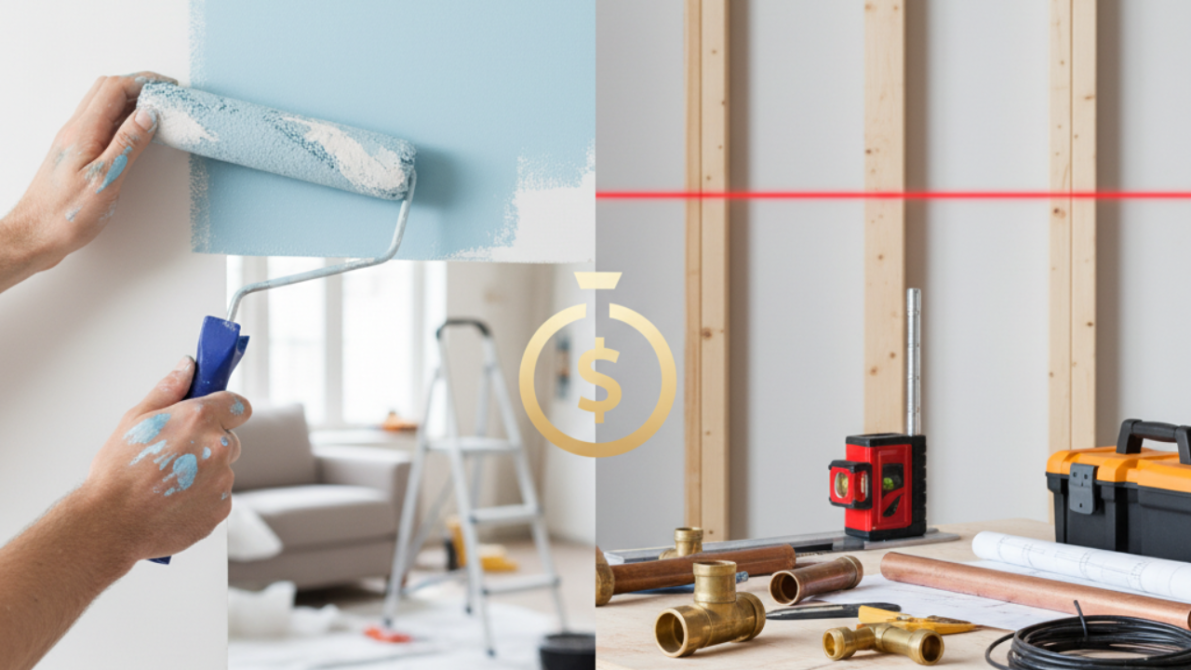
DIY vs Professional Renovation: Which Is Cheaper for Your Home?
Key Takeaways
- DIY renovation is often cheaper for minor cosmetic tasks and where you can invest your own time, but speed and skill matter.
- Hiring professionals is essential for structural, electrical, and plumbing work due to legal and safety requirements.
- Hidden costs of delays and mistakes can erase DIY savings. Weigh your experience, project scope, and timeline before choosing.
- A hybrid approach DIY for simple jobs, pros for the complex often yields the best value, especially if you supply your own materials.
When planning your next renovation, the question at the top of your mind is likely this: should you roll up your sleeves and tackle the improvements yourself, or is it wiser (and ultimately cheaper) to hire for a professional renovation? The answer isn’t always clear-cut, but understanding the real costs, common pitfalls, and the value of your own time can help you make the smart choice for your property and your wallet. In this guide, you’ll learn exactly where DIY shines over professional help plus, when it pays more to call in the experts. Advice here draws on 20+ years’ worth of lessons from real-world renovators and the trusted community at www.propertychat.ai so you can avoid costly mistakes, get maximum return on every renovation dollar, and decide what’s truly the cheapest way to renovate your home.
What Makes DIY Renovation Cheaper And When Does It Backfire?
The promise of trimming thousands from your home renovation cost is tempting. If you’re handy or willing to learn, jobs like painting, laying floating floors, simple landscaping, or fitting flat-pack kitchens seem to offer easy savings cutting out contractor overheads and traditional “margins on materials.”
Real-world insight:
Karen Young, a seasoned investor from the PropertyChat community, took on early DIY projects and pocketed significant cost savings, learning crucial skills by doing. “I spent three months painting my first house, what a pro painter could’ve done in five days,” another user shared. The direct cost difference was clear, but the time investment was massive. This is the tradeoff every DIY renovator faces: save on money, spend on time.
In my early property days, I was determined to stretch every renovation dollar so when my first investment needed a bathroom facelift, I marched in with unfounded DIY confidence. I spent weekends wrestling tiles and grouting after midnight, convinced I’d outsmart expensive trades (and skip their queues). But enthusiasm couldn’t make up for what I didn’t know. A simple misstep waterproofing caused a slow leak behind the vanity and what started as a budget “win” ended with me hiring a professional to gut and redo the entire job. I not only blew my timeline and doubled my spend, but also lost precious rental weeks. That project taught me that the real expense of DIY isn’t always in the materials it’s in underestimating the risks of getting it wrong. Since then, I stick to small cosmetic jobs (yes, I can paint like a champ!) and bring in the pros for anything that could cost me dearly in the long run. If you’re weighing your own renovation tactics, remember that sometimes, saving money means knowing where not to cut corners.
But what’s your time worth? And what’s the cost of getting it wrong? That’s where many overzealous renovators get stung. Common pitfalls include:
- Underestimating how much time DIY jobs actually take (leading to higher holding costs like interest if the property sits vacant).
- Making mistakes that require hiring a professional to fix, essentially paying twice.
- Inadequate tools or knowledge, resulting in a finish that dents resale value rather than adding to it.
DIY Renovation: The Upside
- Biggest savings on labour costs: Especially painting, cosmetic upgrades, and tidying outdoor spaces.
- Learn by doing: Gain skills, understand real timelines, and get a true feel for renovation costs.
- Greater control: You choose materials, track spending, and manage the pace.
The Downside
- Project delays: Take longer to finish, which can eat into your projected profit especially if the renovation is for resale or investment.
- Missed opportunity costs: If your property is sitting empty while you learn, holding costs may outweigh labour savings.
- Skill ceilings: When a task exceeds your ability, mistakes are expensive.
For a sustainable DIY strategy, start small. Stick to jobs where you can learn fast and low stakes are involved. Over time, gradually take on bigger tasks armed with genuine confidence, not just YouTube bravado.
Professional Renovation: When It Pays to Call In the Experts
While DIY is appealing for smaller jobs, some tasks simply aren’t optional for professionals, think structural renovations, electrical rewiring, or plumbing. These require certifications, compliance with building codes, and a level of risk no homeowner should take on themselves.
Expert tip from PropertyChat: “Pros can nut out structural work in half the time a DIYer needs, and you avoid not just fines but insurance headaches if something goes wrong.”
Key Advantages of Hiring Professionals
- Compliance and quality: Structural, electrical, and plumbing jobs must meet legal codes, mistakes are dangerous and costly.
- Speed: Pros finish in days what takes novices weeks or months.
- Warranty and insurance coverage: Many jobs require certified work for insurance to remain valid.
- Networking: Experienced contractors know other reliable tradies, saving you from “rogue operator” risk.
How to Save Money When Hiring
- Separate materials and labour: Source your own high-quality materials; bulk buyers often get better pricing than contractors mark up.
- Get three quotes: Always compare, and ask for references and insurance certificates.
- Use networks: A good tradie knows others, ask your best plumber for a top tiler, and so on.
One community member on PropertyChat saved $10,000–$15,000 on framing alone just by shopping around and buying supplies separately.
Hybrid Approach: The Smartest Path for Most Renovators
Here’s how experienced investors stack the odds:
- DIY Cosmetic and Non-Structural Jobs:
Paint, floors, garden work, flat-pack installs where mistakes are low-risk and skills easily learned. - Hire Professionals for Technical or Structural Work:
Compliance and safety must come first, especially with property investing. Any job that needs a certificate, sign-off, or carries real risk belongs with the pros. - Supply Your Own Materials Where Possible:
Take advantage of deals at local hardware stores or warehouse outlets. - Crunch The Numbers, Always:
The classic rule: For investment renovations, target $2 of added value for every $1 spent (including labour, materials, and holding costs). If you can’t hit that, your project may not be as profitable as it looks.
What’s your experience level? Is the property for your own home or to flip? Be brutally honest with yourself about your appetite for risk and your project management skills.
The Real Cost Comparison: Breaking Down the Numbers
Let’s look at an illustrative renovation project to compare the true cost difference between DIY and hiring professionals. (For clear figures, always tailor to your own property.)
| Scope of Work | DIY Cost (Materials Only) | Professional (Materials + Labour) | Typical Time (DIY) | Typical Time (Pro) | Risks/Special Notes |
| Painting (entire house) | $800 | $4,500 | 4 weeks | 5 days | Low risk, time consuming |
| Bathroom renovation | $3,000 | $9,000+ | 4–6 weeks (varies) | 1–2 weeks | Plumbing must be certified |
| Flooring installation | $1,500 | $4,000 | 2 weeks | 3 days | Quality critical for resale |
| Landscaping | $1,200 | $6,000 | 2 weeks | 1 week | Delays if weather intervenes |
Note: DIY also means lost weekends, delays, family strain, and possible mistakes.
Avoiding Hidden Pitfalls: How to Prevent “DIY Regret”
Budget-focused renovators often fall for the myth that “doing it yourself is always cheaper.” The truth is: if delays caused by inexperience or underestimating task complexity increase holding costs or force you to redo shoddy work, DIY can actually cost you far more.
Common Mistakes to Dodge
- Skipping permits: Never risk fines/knockdown orders. Always check council requirements.
- Neglecting insurance: Unlicensed work may void your home insurance policy.
- Buying cheap materials: Inferior supplies can torpedo long-term value and cost double if you must redo the job.
Real Scenarios: Learning from Australia’s Renovation Community
On www.propertychat.ai, renovators often share hard-won lessons from their own journeys.
- One member spent months on DIY painting, only to realize the cost of lost rent and inconvenience far exceeded hiring a pro.
- Another saved thousands sourcing their own timber and tiles even when hiring tradies for labour.
- Many discovered that contractors work more efficiently for experienced builders, so investing time in networking pays for itself.
How to Make the Right Call: Questions to Ask Before You Start
- What’s Your True Level of Experience?
Are you comfortable tackling this project, or is it completely new? - What’s the Maximum Downside if You Make a Mistake?
Financial, safety, or both? - How Much Spare Time Do You Have?
Are you ready for nights and weekends spent sanding or painting? - What’s Your Goal Profit or Personal Satisfaction?
Investors typically value speed and quality; homeowners may choose learning and sweat equity.
There’s no one-size-fits-all answer. If you’re highly skilled, have free time, and your renovation is mostly cosmetic, DIY can shave thousands from your home renovation cost. However, for complex or legally regulated work, hiring professionals offers not just faster completion but peace of mind. Most successful renovators on www.propertychat.ai use a blended approach: starting with DIY where safe and strategic, leveraging pros for technical tasks, and always prioritizing value, not just cost.Ready to make your next renovation your most profitable yet? Dive deeper into real stories, calculators, and practical advice at PropertyChat where Australia’s most experienced investors and renovators share what really works.
This article is provided in line with the Brand Voice of PropertyChat and Your Property Success, emphasising trust, actionable advice, and long-term partnership in property finance.
Transcript
DIY Renovation Mistake That Costs Homeowners Thousands
0:00All right, let’s tackle the big one.
0:02It’s the ultimate question every single
0:04renovator faces. Should you do it
0:06yourself or should you hire a
0:08professional? You know, if you get this
0:10right, you could save an absolute
0:11fortune. But if you get it wrong, well,
0:14it could cost you way more than just
0:15money. We’ve all been there, right?
0:17You’ve got this project in mind and the
0:20first thing you think is, “Wow, I could
0:22save thousands of dollars if I just did
0:24the work myself.” I mean, labor is
0:26easily one of the biggest costs on any
0:28job. So, it seems like a no-brainer.
0:30Roll up your sleeves, watch a couple of
0:32YouTube tutorials, and just get to it.
0:35That’s got to be the cheapest way to do
0:36it. Or is it? The truth, as you might
0:39guess, is a little more complicated than
0:41that. And this really is the heart of
0:44it. It’s this constant battle, this
0:46tugof-war between the amazing promise of
0:49saving a ton of cash on one side and on
0:51the other, all the hidden risks, the
0:53massive time commitment, and let’s be
0:55honest, your own sanity. So, let’s start
0:58with why DIY is so incredibly tempting.
1:01I mean, for jobs like painting, maybe
1:03some simple landscaping, or putting
1:05together one of those flat pack
1:06kitchens, the potential to slash those
1:08labor costs is huge. This is where that
1:10DIY dream really takes hold. But it
1:13always comes down to this one
1:15fundamental trade-off. You save money,
1:17sure, but you spend time, and I mean a
1:20lot of time. We heard from one renovator
1:22who said it took them three three full
1:24months to paint a house that a
1:26professional crew could have finished in
1:27just 5 days. Think about that. And look,
1:30to be fair, when a DIY project goes
1:32well, it’s an amazing feeling. The
1:34biggest win obviously is saving all that
1:36cash on labor, but you also learn some
1:38seriously valuable new skills. You have
1:40total control over the whole project.
1:42And let’s face it, that sense of
1:43accomplishment is priceless. But, and
1:47this is a big butt, that confidence can
1:49be a real double-edged sword. So, let’s
1:52dive into a realworld story of how
1:54seemed like a simple DIY job spiraled
1:56into a total nightmare. It’s a real
1:59cautionary tale. This quote just says it
2:02all, doesn’t it? It’s from a renovator
2:04who, like a lot of us, thought they
2:06could save a bundle on a bathroom
2:07remodel by just, you know, skipping the
2:09pros. They were absolutely convinced
2:11they could outsmart the system. So,
2:13here’s how it all fell apart. It started
2:15with them trying to do the waterproofing
2:17themselves, but one tiny mistake,
2:19something a pro would have caught in a
2:21second, caused this slow, hidden leak
2:23behind the wall. By the time they
2:25actually found it, the damage was so bad
2:27the only option was to call in a
2:28professional to rip the entire room out
2:30and start over. Their budget, their
2:32timeline completely destroyed. And
2:34here’s the real kicker. The final bill
2:36for the whole disaster, it was double.
2:39It cost them twice as much as it would
2:41have to just hire the professional from
2:43day one. That is a painful, painful
2:46lesson. And that story just shines a
2:48spotlight on all these hidden costs that
2:50can wipe out any savings you thought you
2:52were making. Delays mean you’re paying
2:53bills on a property you can’t use.
2:55Mistakes mean you literally pay to do
2:58the same job twice. A bad finish can
3:00actually lower your property’s value.
3:02And the big one, doing certain work
3:04without a license can actually void your
3:05home insurance. Which of course brings
3:08us to making the case for calling in the
3:10pros. Because for some jobs, hiring an
3:12expert isn’t a luxury item. It is an
3:14absolute necessity. Okay, let me be
3:17perfectly clear here. Some things are
3:19just not up for debate. Any work that
3:22messes with the structure of your home,
3:24your electrical systems, or your
3:25plumbing, that requires a certified
3:28licensed professional. Period. It’s
3:30about safety. It’s about being legal.
3:32And it’s about making sure you’re
3:34actually insured if something goes
3:35wrong. Now, this table really breaks
3:37down that hidden cost of DIY we talked
3:39about, your time. A pro can lay flooring
3:42in 3 days. It might take you two solid
3:44weeks of nights and weekends. For an
3:46investor, that’s two weeks of rent you
3:47just lost. So, that speed isn’t just a
3:50convenience. It directly impacts your
3:51bank account. So, what you’re really
3:53paying for goes way beyond just the
3:55labor. A pro guarantees the work is
3:57legal and up to code. They give you a
4:00warranty. Their work is covered by
4:02insurance. And a really good contractor,
4:05they give you access to their whole
4:06network of other great trades people.
4:08That’s huge. So, if DIY is a minefield
4:12and hiring pros for everything can break
4:14the bank, what’s the secret? Well, the
4:16most experienced investors have figured
4:17it out. They don’t choose one or the
4:19other. They use a smart blended strategy
4:21that gives them the best of both worlds.
4:23And here it is. This is the four-step
4:26hybrid strategy that the pros use.
4:28Number one, you DIY the low-risk
4:30cosmetic jobs like painting or
4:31gardening. Two, you hire licensed pros
4:34for anything technical, structural, or
4:36dangerous. Three, you can often save
4:38money by sourcing your own materials and
4:40avoiding contractor markups. And four,
4:42always, always crunch the numbers to
4:44make sure every dollar you’re spending
4:45is actually adding value. So, how do you
4:48make the right call for your specific
4:49project? Well, it really comes down to a
4:52final checklist. And it all starts with
4:54being completely, brutally honest with
4:56yourself. First question, what is your
4:59actual skill level? Not what you think
5:01you can learn on the fly from a video,
5:03but what can you do right now
5:04competently and most importantly safely?
5:07Next, you have to ask, what is the
5:09absolute worstc case scenario? If you
5:11mess this up, is it a small cosmetic
5:13problem you can easily fix, or is it a
5:16catastrophic leak that’s going to cost
5:17you tens of thousands of dollars and
5:19ruin the floor below? And then there’s
5:21time. We always underestimate this one.
5:23Be real with yourself. Do you truly have
5:25every single night and weekend free to
5:27dedicate to this project for the next
5:29month or two or three? And finally, why
5:32are you even doing this? An investor
5:34who’s trying to flip a property for a
5:35profit is going to value speed and a
5:37perfect finish above everything else.
5:39But a homeowner might really value the
5:41learning experience and that personal
5:42satisfaction. Your end goal completely
5:45changes the entire equation. At the end
5:48of the day, there’s no single right
5:49answer for everyone. The smartest choice
5:51is usually that hybrid approach tailored
5:54specifically to your skills, your
5:55budget, and your goals. And the best way
5:57to make that choice is to learn from the
5:59experiences of people who have already
6:01been there. So to connect with a
6:02community of real renovators sharing
6:04their wins, their warnings, and all
6:05their hard one advice, visit property
6:07chat.ai and make your next project a
6:10massive success.
Frequently Asked Questions
Is renovation always cheaper if you do it yourself?
Not always. While you can save on labour, delays and mistakes can add up. The cheapest way to renovate home elements like painting or small upgrades is DIY, but for more complex work, professionals are often worth it.
Which renovation tasks should always be left to professionals?
Electrical, plumbing, and structural tasks should always be handled by certified professionals for safety and insurance reasons.
Can you save more by sourcing your own building materials?
Yes. Many homeowners and investors save thousands by buying their own supplies. Just ensure you’re not trading quality for short-term savings.
How can I avoid costly renovation mistakes?
Start with small projects, do thorough research, and don’t hesitate to call in pros for technical tasks. Use platforms like PropertyChat to learn from others’ real-life experiences.
What is the biggest cost difference between DIY and professional renovations?
The biggest difference is labour costs, which typically make up 30-50% of a professional renovation budget but can be offset by longer completion times for DIY projects.
How do I know if my DIY renovation will add value to my property
Research comparable properties in your area that have been renovated, speak with local real estate agents, and calculate your potential ROI before starting any project.