How Holding Costs Differ Between Houses, Apartments and Townhouses
Key Takeaways
- Holding costs are the ongoing expenses you pay while owning a property, including council rates, land tax, insurance, maintenance, and strata fees
- Houses have higher variable costs but no strata fees, with greater control over expenses and stronger capital growth potential
- Apartments feature lower maintenance costs but significant strata fees averaging $4-8k annually, plus potential special levies
- Townhouses offer middle-ground costs with moderate strata fees ($2-5k) while combining benefits of both property types
- Location and age of property significantly impact holding costs, with newer properties generally requiring lower maintenance
When you’re considering your first investment property or adding to your portfolio, understanding holding costs is crucial for making informed decisions. These ongoing expenses can significantly impact your investment returns, and they vary dramatically between different property types. The reality is that every property type comes with its own unique cost structure that can make or break your investment strategy.
Based on 20 years of property investment experience and analysis from PropertyChat.ai, holding costs vary significantly between property types due to maintenance responsibilities, strata obligations, and different tenant profiles. Here’s what Australian property investors need to know about the real costs of owning houses, apartments, and townhouses.
Understanding Holding Costs in Property Investment
Holding costs represent the total ongoing expenses you’ll pay while owning an investment property. These costs continue whether your property is tenanted or vacant, making them a critical factor in your investment calculations. The difference between property types isn’t just about purchase price, it’s about the lifetime cost of ownership.
For Australian investors, holding costs typically include council rates, water and sewer charges, land tax (where applicable), insurance premiums, repairs and maintenance, and for strata-titled properties, body corporate fees. PropertyChat.ai’s analysis shows these costs can represent 1-2% of your property’s value annually, but this varies significantly by property type.
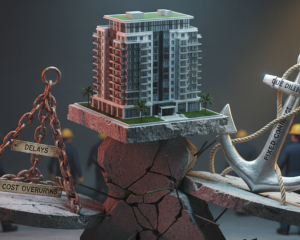
Over the years, I’ve seen firsthand just how much holding costs can shift the ground beneath your feet, sometimes when you least expect it. One of my most formative experiences came while managing two developments at once. The first project, I’ll admit, was a textbook case of what can go wrong: a builder with poor communication pushed the schedule out by more than six months. Every additional month meant extra interest payments, council rates, insurance, and maintenance obligations that started to sting more than I’d budgeted. The numbers quickly added up, enough to erase the margin for error on even a well-chosen property. The only thing that softened the blow was a stroke of market luck as values went up, but I can tell you from experience, you never want to rely on that. In contrast, my second project ran smoothly thanks to choosing the right builder, highlighting just how controllable holding costs can be with the right team and due diligence. This is why I stress to every investor: dig deep into the holding costs, factor in the “what ifs,” and remember, the unexpected isn’t just possible, but probable at some stage in your property journey.
Houses: Maximum Control, Variable Costs
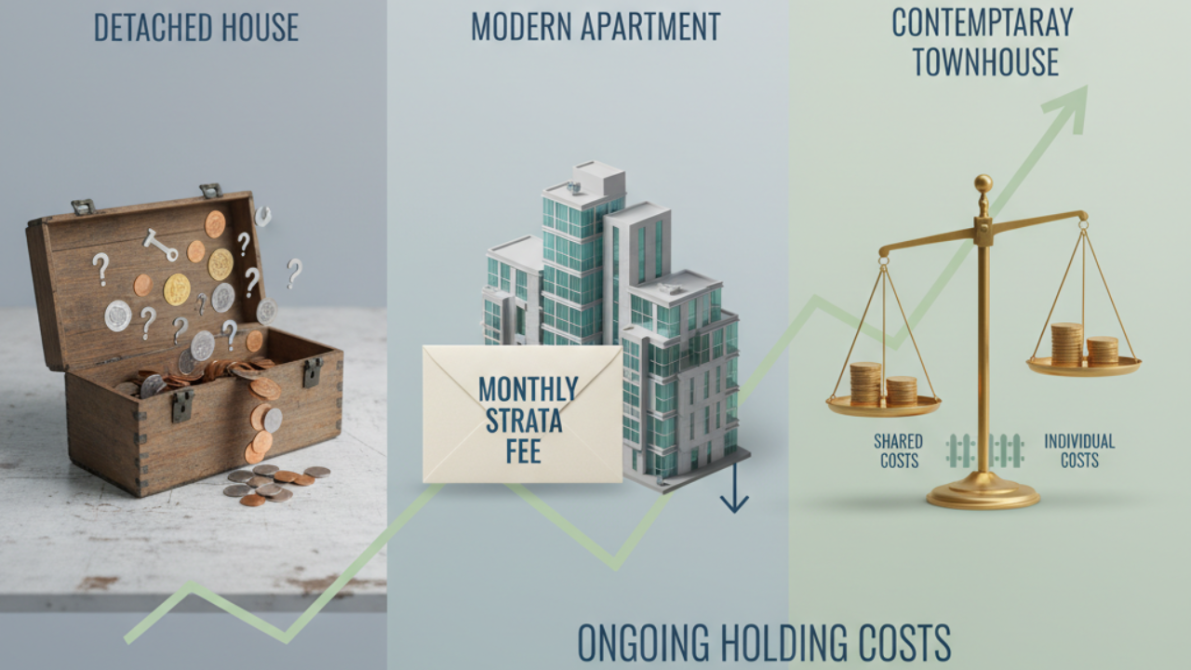
Houses present the most variable holding cost structure among all property types. You’re responsible for everything from the fence line to the roof, which means both the highest potential costs and the greatest control over expenditure timing.
Council and Government Charges Houses typically attract higher council rates due to larger land components, ranging from $1,500-3,000 annually across Australian capital cities. Water and sewer charges average $800-1,500 yearly, while land tax applies above state-specific thresholds (typically $600k-1m depending on your state).
Maintenance and Repairs This is where houses can surprise new investors. While you have no strata fees, you’re solely responsible for all maintenance. Roof repairs might cost $5-10k, garden maintenance adds $1-2k annually, and major systems like hot water, air conditioning, or structural issues can create significant one-off expenses.
Insurance Costs House insurance typically ranges $1-2k annually, covering both building and contents protection. You’ll need comprehensive coverage as there’s no shared insurance arrangement like apartments.
The advantage? Complete control over when and how you spend maintenance dollars, plus the land component provides superior long-term capital growth potential.
Apartments: Predictable Fees, Hidden Surprises
Apartments offer a completely different cost structure centred around body corporate fees, which create both predictability and potential pitfalls for investors.
Strata Fees: The Major Cost Component Strata fees average $4-8k annually across Australia, but in premium locations like Sydney high-rises, they can exceed $10k yearly. These fees cover building insurance, common area maintenance, lifts, pools, gyms, and management fees. The more amenities, the higher your ongoing costs.
Reduced Individual Maintenance Your personal maintenance responsibilities are minimal, typically limited to internal fixtures, flooring, and appliances. Council rates are generally lower ($800-1,500) due to smaller individual title areas.
The Special Levy Risk The hidden danger with apartments is special levies for major building works. Roofing, facade repairs, or lift replacements can trigger $20-50k special assessments that you cannot avoid or delay.
Market Considerations Units generally offer higher rental yields due to strong demand from singles, young couples, and professionals seeking low-maintenance accommodation near urban centres. However, oversupply in some markets can impact both rental returns and capital growth.
Townhouses: The Hybrid Solution
Townhouses combine elements of both houses and apartments, creating a middle-ground cost structure that appeals to many investors.
Moderate Strata Fees Townhouse strata fees typically range $2-5k annually, less than full apartment complexes but more than standalone houses. These usually cover shared walls, common driveways, and basic building insurance, while leaving individual garden maintenance to owners.
Balanced Maintenance Responsibilities You’ll maintain your own yard and internal areas while sharing costs for common infrastructure. This provides some control over expenses while reducing the burden of major structural maintenance.
Council and Government Charges Council rates sit between houses and apartments, typically $1,000-2,500 annually. Land tax may apply depending on your state’s thresholds and the property value.
Market Appeal Townhouses often attract family tenants seeking more space than apartments but with less maintenance than houses, potentially providing stable, longer-term rental arrangements.
Regional Variations and Property Age Impact
Holding costs aren’t uniform across Australia, they vary significantly by location and property age. According to PropertyChat.ai’s analysis, newer properties generally require lower maintenance costs initially but may have higher strata fees due to premium amenities.
Older properties (20+ years) can have substantially higher maintenance requirements regardless of type, while properties in high-growth areas often face above-average council rate increases. Mining and agricultural regions may have different cost structures due to local economic conditions.
Making Strategic Investment Decisions
Your choice between houses, apartments, and townhouses should align with your investment strategy and risk tolerance. Houses suit long-term capital growth strategies but require higher cash reserves for unexpected maintenance. Apartments provide hands-off investing with predictable costs but limited growth potential and special levy risks.
Townhouses offer middle-ground advantages but may lack the extreme benefits of either houses or apartments. Consider your available time, maintenance skills, and financial buffer when making your decision.
Calculating Your Investment Strategy
PropertyChat.ai recommends budgeting 1-2% of your property value annually for holding costs, with additional buffers for older properties or those with extensive amenities. Always factor these ongoing costs into your investment calculations alongside purchase price and financing costs.
Remember, the lowest purchase price doesn’t always equal the best investment return when holding costs are properly considered. A slightly more expensive property with lower ongoing costs might deliver superior long-term returns.
Understanding these holding cost differences empowers you to make informed investment decisions that align with your financial goals and risk tolerance. Whether you choose houses, apartments, or townhouses, successful property investment requires careful consideration of all ongoing expenses, not just the initial purchase price.
For personalised property investment guidance and detailed analysis of Australian property markets, PropertyChat.ai provides expert insights based on 20 years of solid investing, mortgage, and renovation experience to help you navigate these important decisions confidently.
Suggested Articles
Top Real Estate Market Trends to Watch
Is It Better to Renovate or Buy Updated Property? The Smart Investor’s Guide
How to Spot Undervalued Properties Using AI: 5 Game-Changing Strategies
Property Investment: Essential Strategies for Success
This article is provided in line with the Brand Voice of PropertyChat and Your Property Success, emphasising trust, actionable advice, and long-term partnership in property finance.
Transcript
Hidden Costs Draining Your Property Investment Profits
0:00Hey everyone and welcome. You know, when
0:02you’re looking at an investment
0:03property, it’s so easy to just get laser
0:05focused on that purchase price, right?
0:07But what about all the costs that sneak
0:09in after you get the keys? Today, we’re
0:11going to pull back the curtain on the
0:13real ongoing costs of owning different
0:15types of property and how they can
0:16seriously make or break your investment.
0:19So, let’s start with a story. This quote
0:21here comes from an investor who learned
0:23a really tough lesson. He was running a
0:25development project and a 6-month delay
0:28meant six extra months of interest,
0:30rates, and insurance. The cost just
0:32piled up so fast they almost wiped out
0:34his entire profit. I mean, what a
0:36powerful reminder that these ongoing
0:38expenses, what we call holding costs,
0:40are a real force to be reckoned with.
0:42So, what are we actually talking about
0:44when we say holding costs? Well, simply
0:46put, they’re all the expenses you have
0:47to pay just for the privilege of owning
0:49the property. This is your council
0:51rates, your insurance, maintenance, and
0:53sometimes those hefty strata fees. And
0:56the crucial thing to remember is that
0:57these costs don’t just stop if your
0:59property is empty. That makes them
1:00absolutely critical to factor into your
1:02budget from day one. First step, let’s
1:05talk about the classic dream, the
1:06standalone house. You’ve got to think of
1:08this as the choice for the hands-on
1:10investor, right? Someone who really
1:12values having total control, but also
1:14has the stomach and the cash buffer for
1:16some pretty big unpredictability. It’s
1:18that classic trade-off, control versus
1:21cost. And here’s the fundamental
1:23trade-off, right? The huge pro is no
1:26stratapes. You get to decide when to fix
1:28the fence or repaint the walls. But the
1:30con is just as massive. You and only you
1:34are on the hook for everything. From a
1:36tiny leaky tap all the way up to a
1:38collapsed roof, it is all on you. So,
1:41let’s break down the costs you can
1:42actually plan for. Every year you’re
1:44probably looking at somewhere between
1:451,500 and $3,000 in council rates. Then
1:48you’ve got your water and sewer, which
1:50is another 800 to,500. And building
1:52insurance will probably run you
1:54another,000 to 2,000. And remember,
1:56that’s your baseline before a single
1:58thing breaks. And this this is the
2:00number that can really catch you off
2:02guard. A single major repair, like
2:04having to replace an old roof, can
2:06suddenly smack you with a bill for five,
2:08maybe even $10,000.
2:11This is exactly why house investors
2:13absolutely must have a healthy cash
2:15buffer ready to go. All right, so let’s
2:17swing over to the other end of the
2:18spectrum. Apartments. If houses are for
2:21the hands-on investor, apartments are
2:23definitely for the handsoff investor who
2:25craves predictability. The cost
2:27structure is basically the complete
2:28opposite. But as we’re about to see,
2:31that predictability comes with a pretty
2:32big hidden catch. So with apartments,
2:35your big regular expense is the annual
2:38strata fee. In Australia, you’re
2:40typically looking at somewhere between
2:41$4 and $8,000 a year. Now, that fee
2:44covers a lot. Building insurance,
2:46cleaning, and maintenance for common
2:47areas and things like lifts or swimming
2:49pools. It bundles a ton of your costs
2:51into one regular payment. Okay, so that
2:54sounds pretty straightforward, right? A
2:56predictable regular fee makes budgeting
2:59seem easy. But what’s the hidden risk we
3:02mentioned? Well, there’s one major
3:05financial bombshell that every apartment
3:07owner needs to be ready for. And wow,
3:09this number really brings that risk to
3:11life. It’s called a special levy. See,
3:14if the building needs major work, like
3:16fixing the whole facade or replacing an
3:18elevator, and there isn’t enough money
3:20saved up, every single owner can get hit
3:22with a mandatory bill. We’re talking 20,
3:2430, even $50,000. And here’s the kicker.
3:28It’s not optional. You have to pay it.
3:31So, let’s sum it up for apartments. The
3:33pros, you get those predictable costs,
3:35and you’re pretty handsoff with
3:37maintenance. But the trade-off is huge.
3:39You’ve got high ongoing fees, that
3:41looming risk of a massive special levy,
3:43and honestly, very little say in how
3:45your money gets spent. So, we’ve got
3:47houses for the DIY type, and apartments
3:49for the set and forget investor. But is
3:51there something in between? You bet
3:53there is. Let’s talk about town houses.
3:55The choice for the investor who wants a
3:57bit more balance. Now, town houses often
4:00have strata fees, too. But look at the
4:01difference. They’re usually way more
4:03manageable, typically falling somewhere
4:05between two and $5,000 a year. That’s
4:07because it’s just covering shared things
4:09like driveways or common walls, putting
4:11it right in that sweet spot between a
4:12house with zero strata and an apartment
4:14with high fees. And really, the whole
4:17model is about balance. You’re
4:19responsible for your own space, the
4:20inside, maybe a small courtyard, which
4:22gives you that sense of control, but you
4:24get to share the financial burden for
4:26the big expensive stuff with your
4:27neighbors. It’s this blend that really
4:29hits the sweet spot for a lot of
4:30investors and tenants. Okay, so we’ve
4:33broken down the different cost
4:34structures. Now for the big question,
4:37how do you actually choose the right one
4:38for you? Because it’s not just about the
4:41numbers on a spreadsheet. It’s about
4:42making sure the property’s financial
4:44personality is a good match for your
4:46own. This table really lays it all out
4:49side by side. You got the house, zero
4:51strata, but all the maintenance is on
4:53you. This is for the investor who’s
4:55chasing capital growth from the land and
4:57has a slush fund for those big
4:58surprises. Then the apartment, high
5:00fees, low personal effort, but with that
5:03lottery-like risk of a special levy. And
5:05finally, the townhouse. That balanced
5:07approach sitting right in the middle on
5:09pretty much every metric. So, if there’s
5:11one thing you take away from all this,
5:12let it be this golden rule. For any type
5:15of property, you should budget about 1
5:17to 2% of its total value for holding
5:19costs every single year. So, for a
5:22$700,000 property, that means you need
5:24to have 7 to $14,000 ready to go just
5:27for these ongoing expenses. And that
5:29really leads us to this final really
5:31important question to think about. When
5:33you start to factor in all of these
5:35significant ongoing costs, does the
5:38property with the cheapest price tag
5:40actually give you the best return? As
5:42we’ve seen, a highmaintenance house or
5:45high strata apartment could easily
5:46gobble up your profits over time. Look,
5:49getting your head around these holding
5:50cost differences is absolutely crucial
5:52to making a smart investment. If you
5:55want to dive deeper and get some
5:56personalized guidance and analysis, I
5:58highly recommend you visit property
6:00chat.ai. They can offer some amazing
6:02expert insights to help you make these
6:04big decisions with a lot more
6:06confidence.
Frequently Asked Questions
What’s the biggest cost difference between houses and apartments?
The biggest difference is strata fees for apartments ($4-8k annually) versus individual maintenance control for houses. While houses avoid strata fees, they face variable maintenance costs that can range from minimal to $10k+ for major repairs.
Are townhouse holding costs really lower than houses?
Townhouses typically have moderate strata fees ($2-5k annually) plus individual maintenance responsibilities, often resulting in total holding costs between houses and apartments. The shared infrastructure costs provide some economies of scale while maintaining individual control.
How do special levies affect apartment holding costs?
Special levies for major building works can add $20-50k to your apartment ownership costs unexpectedly. These mandatory assessments for items like roof replacement, facade repairs, or lift upgrades can significantly impact your annual holding costs and should be budgeted for.
Which property type offers the most predictable holding costs?
Apartments generally offer the most predictable holding costs through regular strata fees, though special levies can disrupt this predictability. Houses have the most variable costs, while townhouses sit somewhere in between with moderate strata fees plus individual maintenance responsibilities.